A Number Worth Knowing
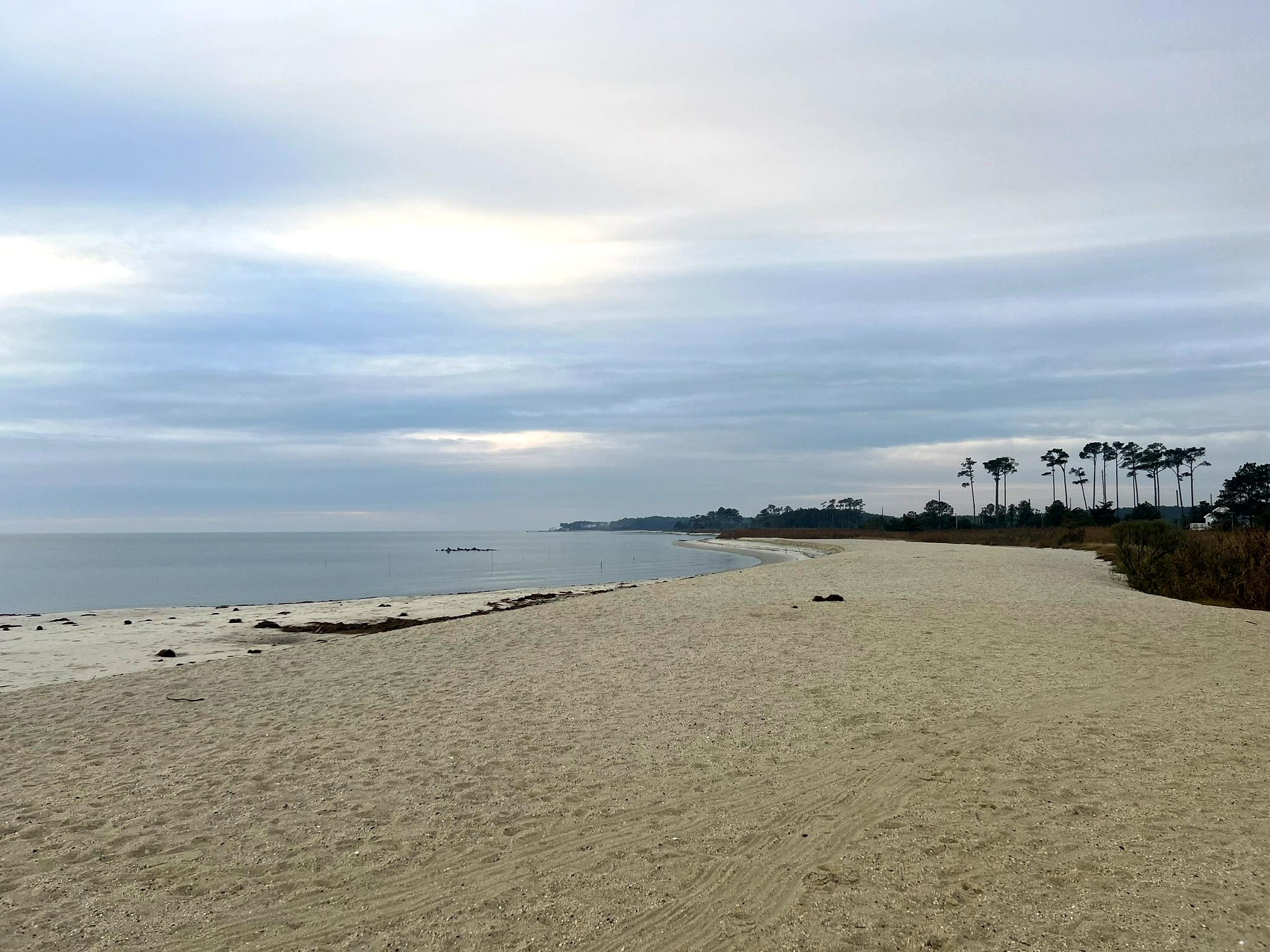
Mathews County doesn't have a convention center, a theme park, or an interstate highway. It has water — 243 miles of tidal shoreline wrapping around a peninsula that most Virginians have to make a deliberate decision to visit. Getting here requires wanting to be here. And in 2025, more than 100,000 tracked visitor trips ended in Mathews County. That's a number that deserves more than a footnote.
The data comes from a mobile location intelligence platform that the Virginia Tourism Corporation (VTC) uses to track visitor patterns across the state's recognized destination management organizations. By analyzing anonymized mobile device location signals, the platform can identify when a device associated with a home address outside the county travels into Mathews, how long it stays, and where it came from — all without identifying individual users. The result is a remarkably precise picture of visitor flow that previous generations of tourism data simply couldn't provide.
What the Data Actually Shows
Three data points in the tourism report stand out as strategically significant for how the county thinks about tourism investment and marketing.
The first is overnight rate. Approximately 70% of Mathews visitor trips involve at least one overnight stay — a figure substantially higher than what many day-trip-dependent Virginia destinations see. This matters economically because overnight visitors spend more: on lodging, on multiple meals, on activities and retail. An overnight visitor is worth multiples of a day-tripper in direct economic impact.
The second is origin concentration. Nearly 60% of all visitor trips to Mathews originate from the Richmond metropolitan area. This makes Richmond by far the county's primary market — a two-hour drive that makes Mathews a compelling weekend destination for the region's roughly 1.3 million residents. The Northern Virginia corridor is likely the second market, with Hampton Roads representing a smaller but geographically proximate third.
The third is what the data doesn't show as strongly as it could: shoulder season traffic. Summer visitation is well-established in Mathews — the farmers market, the waterway access, the natural beauty all draw reliably in June, July, and August. What the data reveals is that spring and fall — when the Bay is arguably at its most spectacular, water temperatures are comfortable for kayaking and crabbing, and the crowds are thinner — represent the most underdeveloped opportunity in the county's tourism profile.
Virginia's Broader Tourism Surge
Mathews' milestone sits within a larger statewide trend. In August 2025, Governor Glenn Youngkin and the Virginia Tourism Corporation announced that Virginia's tourism industry generated a record $35.1 billion in visitor spending in 2024 — a 5.4% increase from 2023, and well above the pre-pandemic figure of $29.1 billion in 2019. Overnight visitation reached 44.7 million, surpassing pre-pandemic levels for the first time.
The statewide context matters for Mathews for two reasons. First, it confirms that Virginia's overall draw as a destination is strong and growing — the pipeline of visitors exploring the Commonwealth is larger than it has ever been. Second, it frames what share of that pipeline Mathews County is currently capturing, and what share it might be able to convert with more targeted marketing and more developed shoulder-season offerings.

The Shoulder Season Opportunity
The EDA's strategic focus on shoulder season — spring (April–May) and fall (September–October) — is not a new idea, but the tourism data provides the clearest evidence yet of why it's the right priority. If the county can convert even a fraction of its existing summer visitor base into repeat visitors who return in the shoulder months, the economic impact compounds significantly without requiring the acquisition of a single new tourist from outside the Richmond market.
What does a shoulder-season visit to Mathews look like? Birding along the county's tidal marshes during fall migration, when Mathews sits directly in the Atlantic Flyway. Crabbing and kayaking through October on a Piankatank tributary in 65-degree weather. Harvest-season dining at local restaurants with Bay-caught seafood. A weekend at a waterfront rental when the crowds are gone but the beauty is at its peak.
The county's existing assets — the New Point Comfort Lighthouse, the farmers market, Sibley's General Store and the Visitor Center, the county's four public boat ramps, the 90-mile blueways trail system — are all present year-round. The gap is awareness and programming that gives potential visitors a reason to come in October instead of waiting for July.
What the EDA Is Watching
The tourism data gives the Mathews County EDA something it hasn't had before: a baseline. With a documented 100,000+ trip benchmark and specific origin and behavioral data, the EDA can now set measurable targets, test marketing interventions against observable changes in visitor flow, and make the case to state and regional tourism partners for investment in a destination that is clearly attracting visitors but has untapped capacity in its shoulder months.
The goal isn't to fundamentally change what Mathews is. The goal is to make sure the people most likely to love it — Richmond residents with a weekend free, active retirees, remote workers looking for a destination that reminds them why they moved to somewhere like Mathews in the first place — know that the door is open in April and October, not just in July.